There is a difference between a smart scale that tracks your weight and one that makes trends easier to follow. A basic scale gives you a number. A smart scale adds a trend, context and a clearer record of where you are heading.
It cannot cause weight loss on its own.
Regular self-weighing can make changes easier to notice, although the scale is only one part of a wider approach to weight management. Daily readings also fluctuate with hydration, food and timing, so a trend is more useful than a single measurement.
The question is which smart scale makes that feedback most useful. This guide answers it.
What Makes a Smart Scale Good for Weight Loss?
Before looking at specific products, it is worth understanding which features matter for weight loss and which simply look impressive on a spec sheet.
What matters:
A clear, consistent weight trend graph is the most useful feature. Seeing the past 30, 60 or 90 days helps you judge progress without overreacting to one reading.
Daily weight can fluctuate by one to two kilograms because of water, food and timing. A trend line helps you see the overall direction when today’s reading is higher than yesterday’s.
Body-fat percentage tracking can help you follow direction, even though the absolute number is not perfectly accurate. If you are losing weight through exercise and eating well, you want to see fat trending down and muscle staying stable.
App quality matters because the app is where you review your progress. A good app shows data clearly, does not bury it in menus, and makes it easier to understand what your weight means for your health.
For UK users, a stone display makes the data more immediate because it uses the unit they naturally think in.
What matters less than you think:
The number of metrics tracked. A scale that measures 22 body-composition metrics is not necessarily more useful for weight loss than one that measures 13. Extra metrics such as skeletal fat index and extracellular water ratio are interesting but not actionable for most people.
Wi-Fi versus Bluetooth. Wi-Fi is more convenient for households with multiple users, but Bluetooth sync is usually adequate for one person tracking weight.
The Best Smart Scales for Weight Loss in the UK
| Scale | Best for | Main strength | Main limitation |
|---|---|---|---|
| Withings Body Smart | Clear progress tracking | Polished trend graphs and Wi-Fi | Costs more than budget models |
| Renpho Elis 1 | Low-cost tracking | Broad app compatibility | Simpler trend presentation |
| Eufy P2 Pro | Body-composition context | 16 metrics incl. heart rate | 2.4 GHz Wi-Fi only |
| Salter Smart Scale | UK high-street brand | Trusted British brand, 8 users | Simpler app |
| Eufy Smart Scale A1 | Ultra-budget tracking | £15, 12 metrics, 4.4/5 rating | Bluetooth-only, basic display |
Want the clearest weight trend?
Compare all five smart scales1. Withings Body Smart, Best Overall for Weight Loss
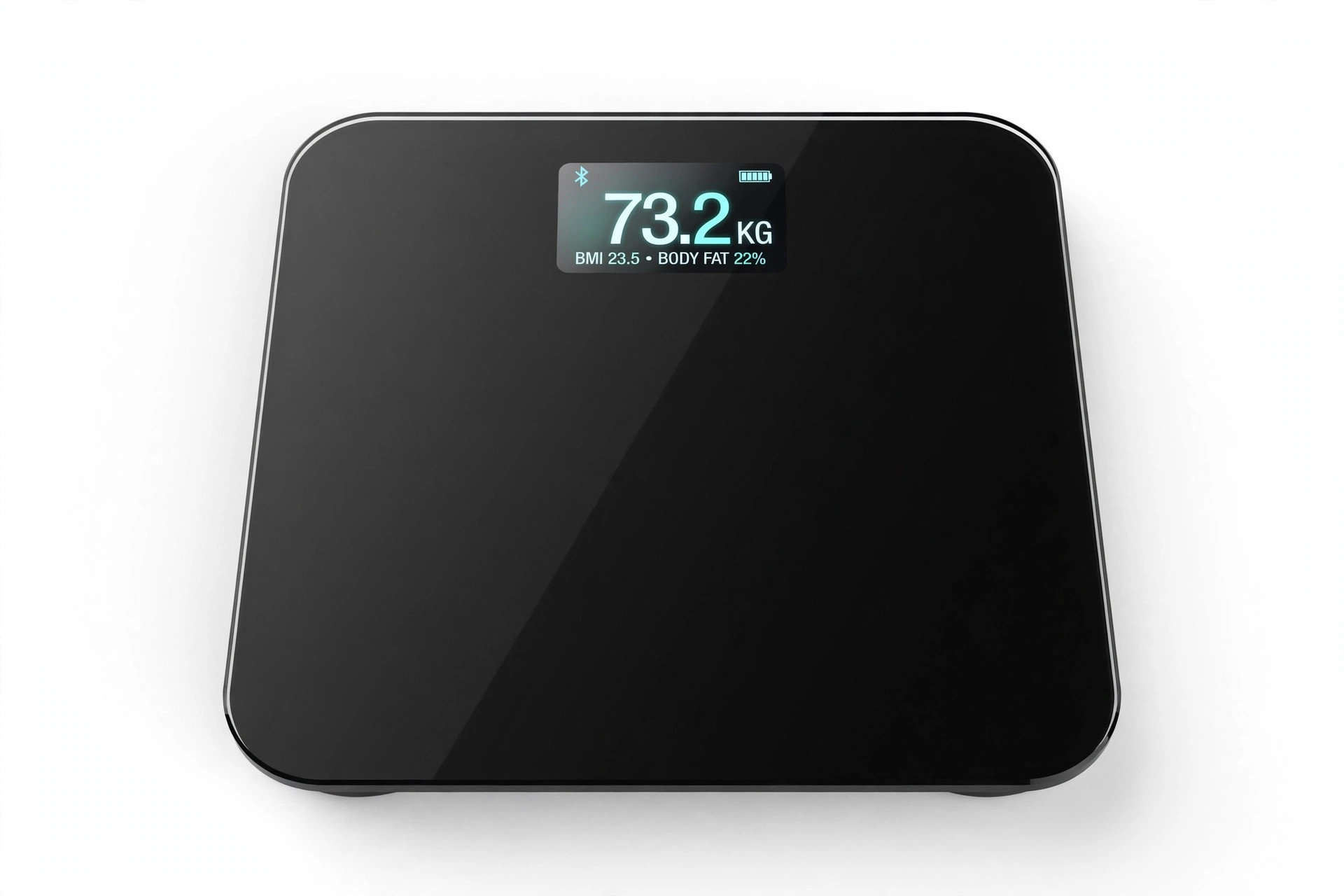
The Withings Body Smart earns the top spot mainly because of its app. Health Mate shows your weight trend clearly and lets you choose the time period you want to review.
Its trend line filters out some daily variation, making it easier to see where your weight is heading.
The scale also includes Weight Goal, where you set a target weight and the app tracks progress toward it week by week. Structured goal tracking with visual feedback can make self-monitoring easier to follow.
Key specs (verified): 2.8-inch colour screen · Wi-Fi + Bluetooth (syncs without phone nearby) · stone/lb/kg display · up to 8 users with auto-recognition · ~15-month battery · body fat %, muscle mass, Visceral Fat Index, BMR.
For UK users, stone display is available through the Health Mate app. You can also check what your target weight means in stone and kilograms using our stone to kg converter.
UK price: £89.95 (verified from withings.com).
Pros: Dual Wi-Fi + Bluetooth · stone display · 15-month battery · 8 users · polished app with goal tracking.
Cons: Withings+ subscription (£89.50/year) pushed for premium features · setup requires a smartphone.
Check Withings Body Smart price
2. Renpho Elis 1, Best Budget Option for Weight Loss
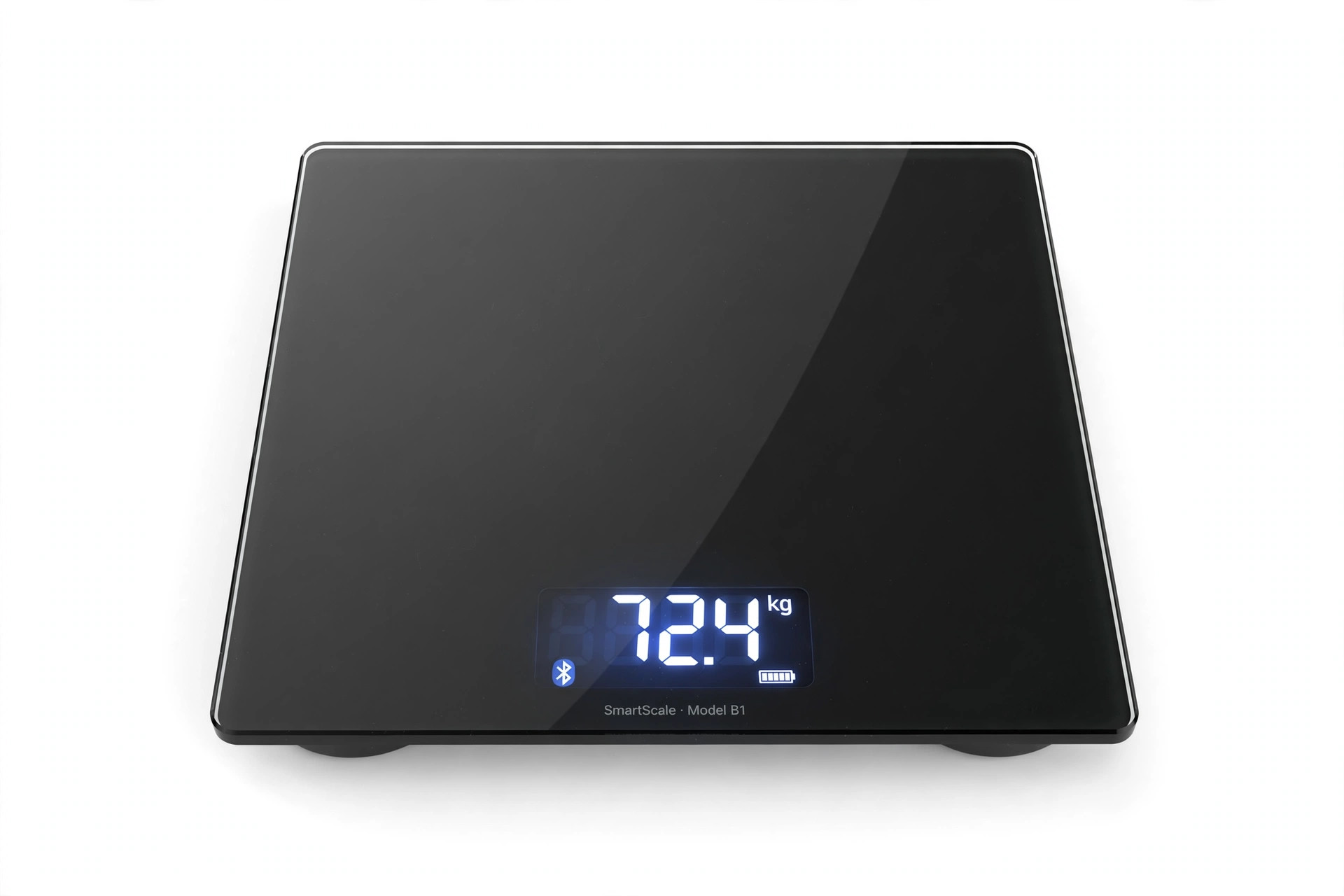
For anyone who wants to start tracking weight without spending much, the Renpho Elis 1 is a practical entry point. At under £30, it offers weight tracking, 13 body-composition metrics and MyFitnessPal support.
That connection is useful if you also track food intake. Daily weight can sync alongside calorie data, helping you compare the two trends.
Key specs (verified): 13 body metrics (BMI, body fat %, muscle mass, BMR, metabolic age and more) · Bluetooth-only (no Wi-Fi) · kg/lb display only — no stone · unlimited users · syncs with Apple Health, Fitbit, Samsung Health, MyFitnessPal · 4.9/5 from 10,000+ reviews.
The limitation is that Renpho’s weight trend presentation is simpler than Withings. The graphs are there, but Health Mate presents the data more clearly.
For most people starting a weight-loss journey, Renpho is more than adequate — just note you will need our kg to stone converter if you think in stone.
UK price: Around £20 to £30 on Amazon UK.
Pros: Unbeatable value · 13 metrics · unlimited profiles · excellent app integrations · highly rated.
Cons: No stone display · Bluetooth-only (phone must be nearby) · simpler trend graphs.
3. Eufy Smart Scale P2 Pro, Best for Body Composition During Weight Loss
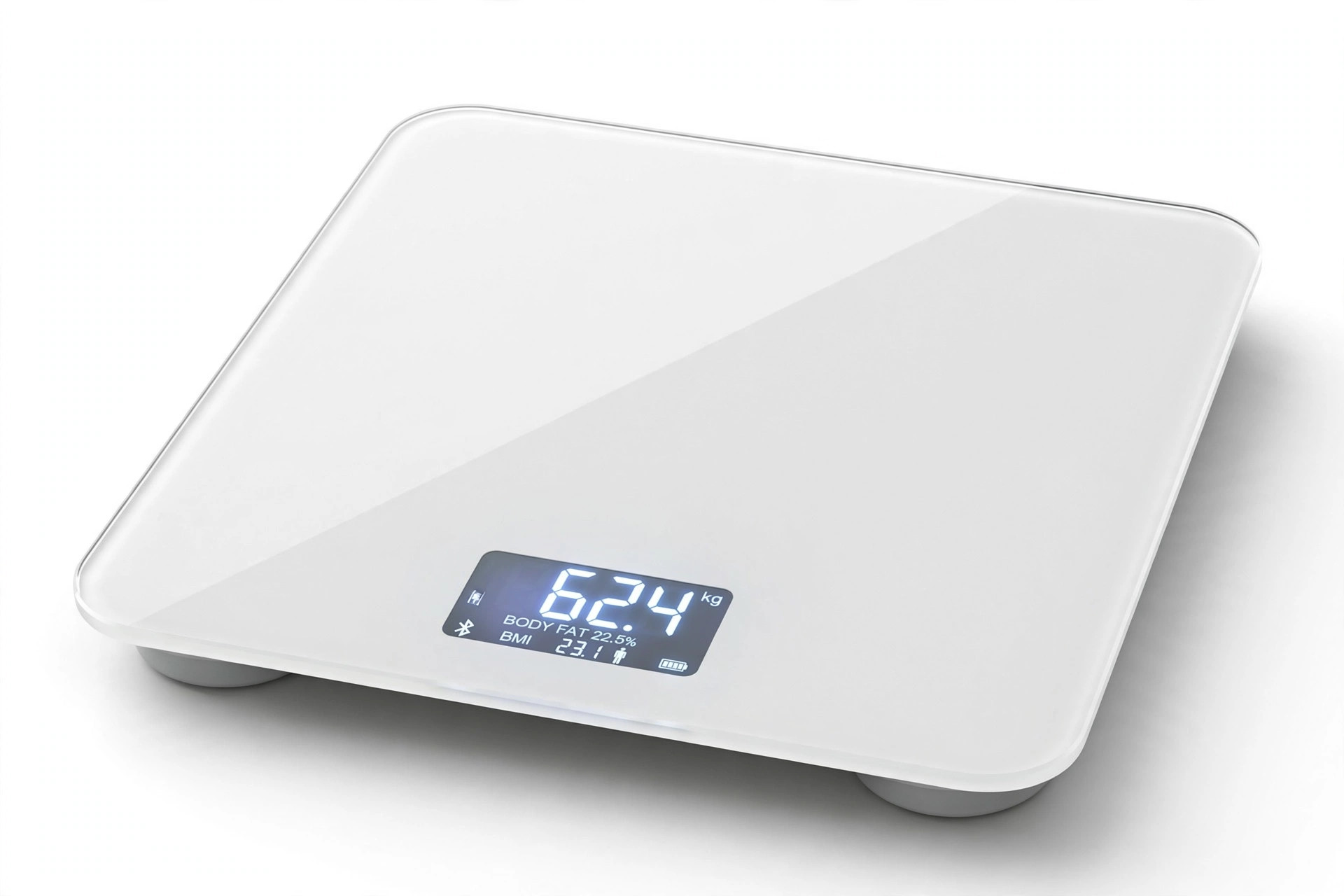
When you are losing weight, you may want to understand whether body composition is changing as well as scale weight. The Eufy P2 Pro reports 16 body-composition metrics, including estimates for muscle and fat — plus heart rate, which rivals lack.
These estimates are best used to follow trends rather than as precise measurements.
Key specs (verified): 16 metrics (body fat %, heart rate, BMI, muscle mass, bone mass, water, protein, BMR) · Bluetooth 5.0 + Wi-Fi (2.4 GHz) — auto-syncs without phone nearby · stone display supported · 3D body model in app · Baby/Pet modes · IPX5 waterproof.
The EufyLife app presents the data clearly, and the scale connects to Apple Health, Google Fit and Fitbit. If you are doing resistance training alongside cardio, muscle-mass tracking may provide additional context.
For context on whether your current weight is healthy for your height, our BMI calculator uses NHS reference ranges and accepts readings in both stone and kilograms.
UK price: £54.99 (verified from eufy.com).
Pros: 16 metrics including heart rate at £54.99 · dual Bluetooth + Wi-Fi · stone display · Baby/Pet modes.
Cons: Wi-Fi is 2.4 GHz only · on-scale screen shows limited data (full detail needs app).
4. Salter Smart Scale, Best UK High-Street Brand
Salter is a long-established British brand, widely available in Argos, Currys and John Lewis. Their smart scale offers body-composition tracking with straightforward setup — ideal if you prefer buying from familiar UK retailers.
Key specs: Bluetooth connectivity · body weight, fat, water, muscle mass, bone mass, BMI and BMR · 8 user profiles · typical price £25 to £60.
Pros: Trusted UK brand · easy high-street availability and returns · simple setup for non-technical users.
Cons: App less feature-rich than Withings or Renpho · fewer advanced metrics.
Check Salter Smart Scale price
5. Eufy Smart Scale A1, Best Ultra-Budget for Weight Loss
At around £15, the Eufy A1 is the cheapest reputable smart scale — a fraction of the price of premium models, yet it tracks 12 body-composition measurements and holds a 4.4/5 rating from over 18,000 Amazon reviewers.
Key specs (verified): 12 measurements (weight, body fat, BMI and more) · Bluetooth 5.1 · EufyLife app · 4.4/5 from 18,054 reviews · typical price ~£15.
Pros: Unbeatable price · solid 4.4/5 rating · simple Bluetooth setup · good EufyLife app.
Cons: Bluetooth-only (no Wi-Fi) · basic display · fewer metrics than P2 Pro.
Our Verdict: Best Smart Scale for Weight Loss
For weight loss, the Withings Body Smart (£89.95) is our top pick. Its Health Mate app shows weight trends most clearly, filtering out daily noise so you can see real progress. Automatic Wi-Fi sync means your data is always up to date, and stone display keeps everything in familiar UK units.
If you are just starting and want to spend less, the Eufy Smart Scale A1 (around £15) tracks the essentials reliably. For those who want body-composition context alongside weight, the Eufy P2 Pro (£54.99) adds 16 metrics including heart rate.
How We Chose These Scales
We focused on what matters for weight loss: clear trend visualisation, reliable syncing, stone display for UK users, and verified pricing. All specifications were checked against official manufacturer websites (withings.com, renpho.com, eufy.com) in October 2026. We did not physically test each scale.
Which Scale Should You Buy for Weight Loss?
Tight budget: Eufy Smart Scale A1 (around £15) or Renpho Elis 1 (13 metrics, broad app support). Best overall: Withings Body Smart (£89.95, clearest trends, Wi-Fi). Body composition focus: Eufy P2 Pro (£54.99, 16 metrics). UK high-street brand: Salter smart scale.
How to Use a Smart Scale Effectively for Weight Loss
Buying a smart scale is the easy part. Getting genuine value from it requires a consistent routine.
Weigh yourself at the same time every day. First thing in the morning, after using the bathroom and before eating or drinking, is usually the most consistent time.
Body weight can vary by one to two kilograms during the day, so consistent timing matters.
Focus on the weekly average rather than the daily reading. Most smart-scale apps show a weekly average. Use this as your primary metric rather than treating one high reading as a failed diet.
Set a realistic target and give it time. A safe rate of weight loss is 0.5 to 1 kilogram per week. At this rate, losing one stone (6.35 kg) takes 6 to 13 weeks.
Expecting faster results can create frustration with data that is actually showing normal progress. Use our stone to kg converter if your scale defaults to metric.
Do not weigh yourself after a big meal or a long flight. The reading will be temporarily higher and is not useful for tracking your usual trend.
Track body composition alongside weight. If weight is not moving but body-fat percentage is slowly declining, weight alone may be hiding a positive change.
Is Your Weight Loss Fat or Muscle? How to Tell
The bathroom scale shows total weight dropping, but it cannot tell you what kind of weight you are losing. This distinction matters: losing fat improves health, while losing muscle slows your metabolism and makes keeping weight off harder.
Watch the body-fat percentage trend, not just weight. If your weight is falling and your body-fat percentage is falling too, you are losing fat at a healthy rate. If weight is falling but body-fat percentage is steady or rising, you may be losing muscle, which signals a need for more protein and strength training.
Track skeletal muscle mass in kilograms. Most smart scales report this. You want it steady or rising slightly while you lose weight. A sustained decrease over several weeks is a warning sign.
Do not panic over weekly noise. Body-fat readings shift with hydration, so only 4-week trends are meaningful. A single week's reading proves nothing.
Pair Your Scale With Other Tracking
A smart scale is one data source. For a complete picture of weight-loss progress, combine it with:
Monthly photos (front, side, back, same outfit, same lighting). Visual changes often appear before the scale reflects them.
Tape measurements (waist, hips, thigh, upper arm) once a month. Waist measurement in particular tracks health risk better than weight alone.
How clothes fit. An underrated qualitative metric that captures real change.
Strength progression. If the weights you lift are increasing while scale weight falls, you are very likely losing fat and keeping muscle.
Any single data source is noisy. Together they give a clearer picture than any one alone.
What a Healthy Weight Looks Like in Stone
For UK adults, the NHS uses BMI as a starting guide for healthy weight. A BMI between 18.5 and 24.9 is considered healthy, but the weight range depends on height.
For someone 5 feet 6 inches tall (168 cm), a healthy-weight range is roughly 8 stone 7 pounds to 11 stone 6 pounds (54 to 73 kg). At 5 feet 10 inches (178 cm), it is roughly 9 stone 13 pounds to 13 stone 4 pounds (63 to 84 kg).
Our ideal weight guide gives a full breakdown by height. Our BMI calculator calculates BMI from any weight and height combination.
Interpreting Smart Scale Data
Smart scales can help you record a consistent trend, but the data should not become a source of anxiety or be treated as a complete health assessment.
Weight can move up and down because of water retention, food, menstrual-cycle changes and sleep. Short-term zigzags do not by themselves show whether a longer-term plan is working.
Look at several weeks rather than comparing yesterday’s reading with today’s. BMI is a screening measure rather than a diagnosis, so our BMI calculator and ideal weight guide add height context.
Weight Loss Smart Scale FAQ
Do smart scales help with weight loss?
Regular self-weighing is associated with greater weight loss and better long-term maintenance. A smart scale makes daily weighing easy and builds a trend over time.
What is the best smart scale for losing weight in the UK?
The Withings Body Smart is the best option for most UK users because of its clear trend presentation and weight-goal tracking.
How much should I weigh in stone?
It depends on your height. Use our ideal weight guide or BMI calculator for height-based context.
Should I weigh myself every day?
Daily weighing gives useful trend data, but focus on the weekly average because daily weights fluctuate naturally.
How fast should I expect to lose weight?
The NHS recommends 0.5 to 1 kilogram per week as a safe and sustainable rate. One stone (6.35 kg) takes 6 to 13 weeks at that rate.
Can I convert my weight-loss target from stone to kg?
Yes. One stone is 6.35029 kilograms and two stone is 12.7 kg. Use our stone to kg converter.
Does body-fat percentage go down when you lose weight?
Not always in a straight line. It can temporarily stay the same or rise slightly if you lose muscle or water. Over time, consistent weight loss should reduce body fat. If tracking body fat is your goal, see our best scales for body fat guide.
Why has my weight loss stalled even though I am eating well?
Plateaus are normal and can last several weeks. Water retention, muscle gain from new exercise, hormonal cycles and inconsistent weighing conditions can all mask fat loss on the scale. Check your 4-week trend, tape measurements and photos before concluding nothing is happening.
Should I stop weighing myself if it causes anxiety?
Yes. If daily weigh-ins harm your mental health or relationship with food, switch to weekly weighing or stop entirely and use photos, measurements and how clothes fit instead. Smart scales can be counterproductive for people with a history of eating disorders. Tracking less, not more, may be the right choice. Speak to your GP if weighing is affecting your wellbeing.