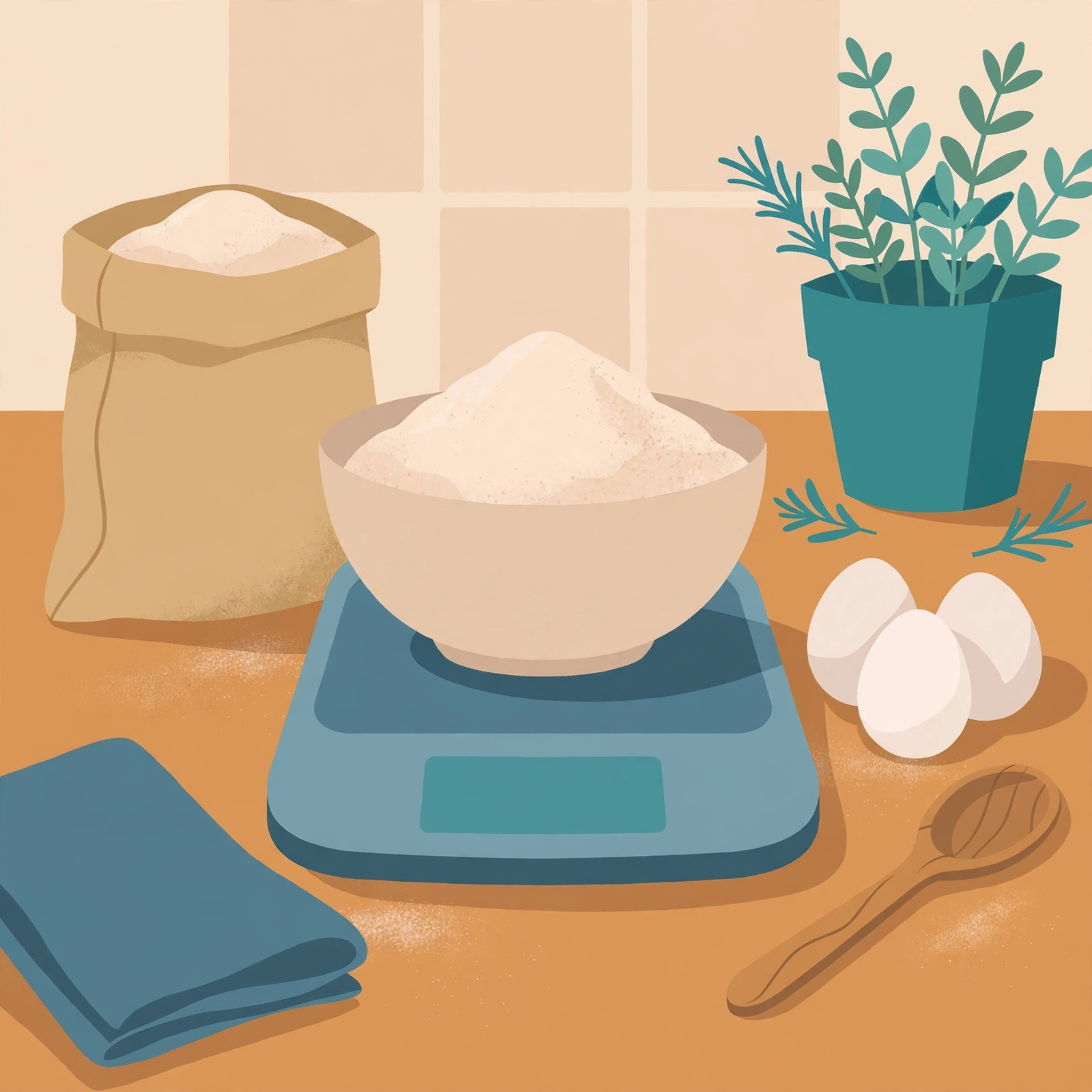
Quick answer: Cups lie. A cup of flour can weigh anywhere from 120g to 160g depending on how you scoop, that's the difference between a perfect Victoria sponge and a brick. A kitchen scale removes the guesswork entirely.
After comparing the current market, the OXO Good Grips 11lb Stainless Steel is the best kitchen scale for most UK cooks: pull-out display you can actually read under a mixing bowl, 1g precision, and build quality that lasts years. On a budget? The Etekcity EK6015, the best-selling kitchen scale in the world, does 90% of the job for a fraction of the price. Serious baker? Skip to the My Weigh KD-8000.
Affiliate disclosure: Product links are affiliate links. StoneToKG may earn a commission at no extra cost to you. This does not affect our recommendations. Most of these models are also available on Amazon UK, search the model name there if you prefer.
Why Every Serious Cook Weighs Ingredients
British recipes have a split personality: older ones in cups and spoonfuls, modern ones in grams. The gram-based ones are better, and it's not close. Volume measurements vary with how tightly you pack, how humid your kitchen is, and whose cup you're using. Weight doesn't care about any of that.
For baking, it's non-negotiable. Bread, pastry and cakes are chemistry: ratios matter, and a 10% error in flour or water changes the outcome. Professional bakers don't own measuring cups; they work in grams and baker's percentages (every ingredient expressed as a percentage of the flour weight), which lets them scale any recipe up or down perfectly.
There's a practical bonus too: weigh directly into the mixing bowl using the tare button and you wash one bowl instead of five measuring cups. Once you start, you'll never go back.
What to Look for in a Kitchen Scale
1g precision minimum. This is the standard for cooking and baking. Only pay extra for 0.1g if you weigh yeast, spices, or coffee regularly.
5kg capacity covers most kitchens. Go to 10kg+ only if you batch-cook, bake large loaves, or weigh heavy pots. More capacity than you need just costs precision.
Tare/zero button is essential. Every scale here has one, it lets you zero out the bowl and add ingredients cumulatively. Non-negotiable.
Readable display. The most underrated feature. A display hidden under a big mixing bowl is useless. Pull-out or raised displays (like OXO's) solve this properly.
Grams + ml. UK recipes use grams for solids and ml for liquids. Any decent scale offers both; the g/ml distinction matters because 100ml of flour is not 100g.
Easy to clean. Stainless steel or glass platforms wipe clean; fiddly buttons and crevices collect flour dust forever. Sealed buttons are a real plus.
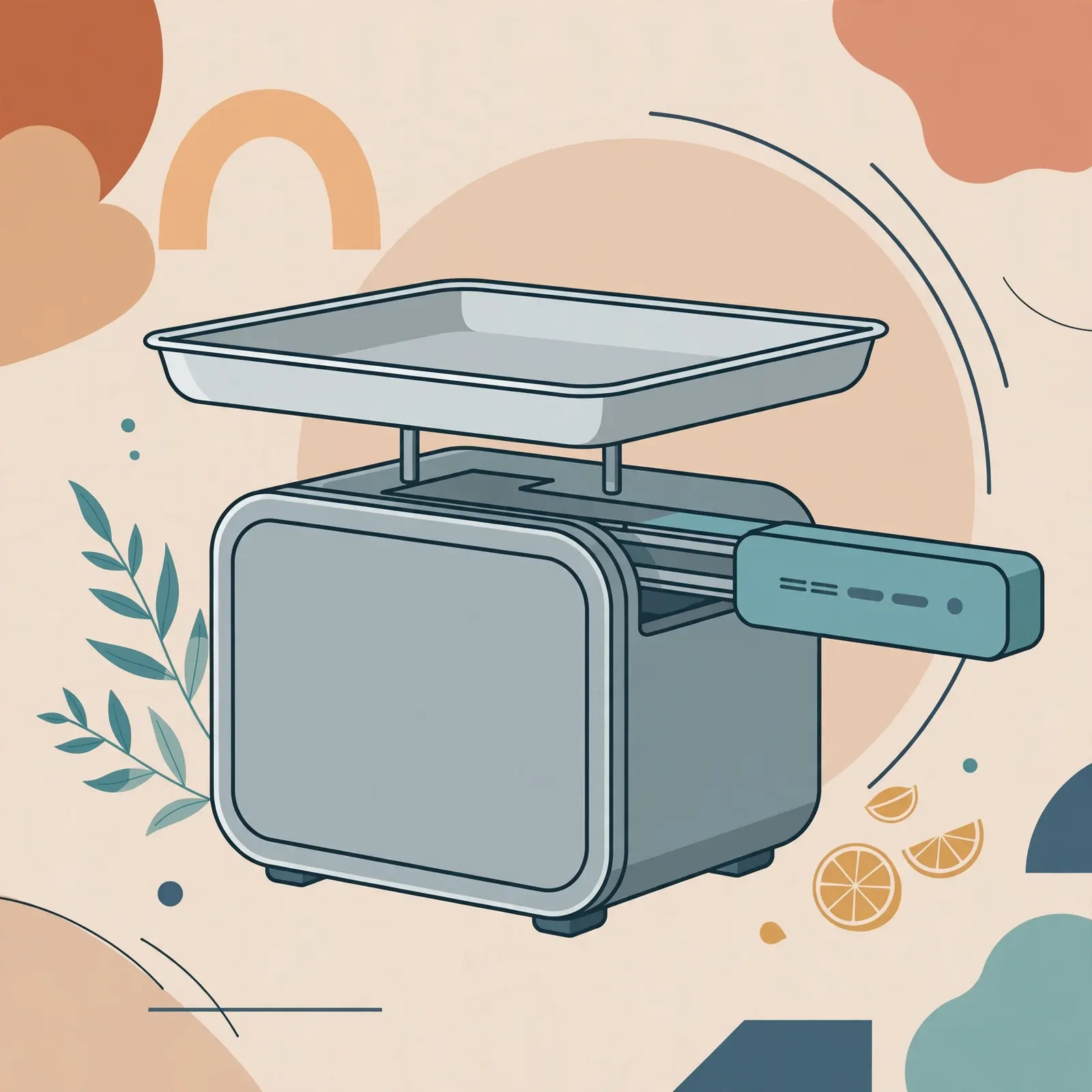
The OXO is the kitchen scale that reviewers keep coming back to, year after year. The genius is the pull-out display: slide it out from under the base and you can read the weight even with a huge mixing bowl on top: the single most annoying problem with cheap scales, solved properly. Stainless steel platform, 1g precision up to 5kg, zero/tare function, and a capacity meter that warns you before you overload it.
Our take: This is the "buy it once" kitchen scale. It costs more than the budget options, but the display design alone justifies it. You'll use this daily for a decade. If you only buy one kitchen scale in your life, make it this one.
Pros
Pull-out display readable under any bowl
Stainless steel, smudge-resistant, removable for cleaning
The best-selling kitchen scale in the world, with a review count in the hundreds of thousands. 1g precision, 5kg capacity, tare function, five units (g, oz, lb:oz, ml, fl'oz), backlit LCD, and a 304 stainless steel surface that wipes clean. It does everything a kitchen scale needs to do, for the price of a takeaway coffee or two.
Our take: The honest truth? For most people, this is all the kitchen scale they'll ever need. The OXO wins on display design and longevity, but the Etekcity weighs flour just as accurately. If you're buying your first kitchen scale or just want a spare, start here.
Two buttons. That's the whole interface: on/tare and unit. The Escali Primo has been a kitchen staple for nearly two decades because it refuses to overcomplicate things. The sealed control panel shrugs off flour dust and spills, the rounded body wipes clean in seconds, and it comes in a range of colours if your kitchen has a personality. 1g precision, 5kg capacity, 5-year warranty.
Our take: The scale to buy for parents, grandparents, or anyone who finds kitchen gadgets intimidating. Fewer features than the Etekcity, but the sealed panel and the warranty make it the most hassle-free ownership experience here.
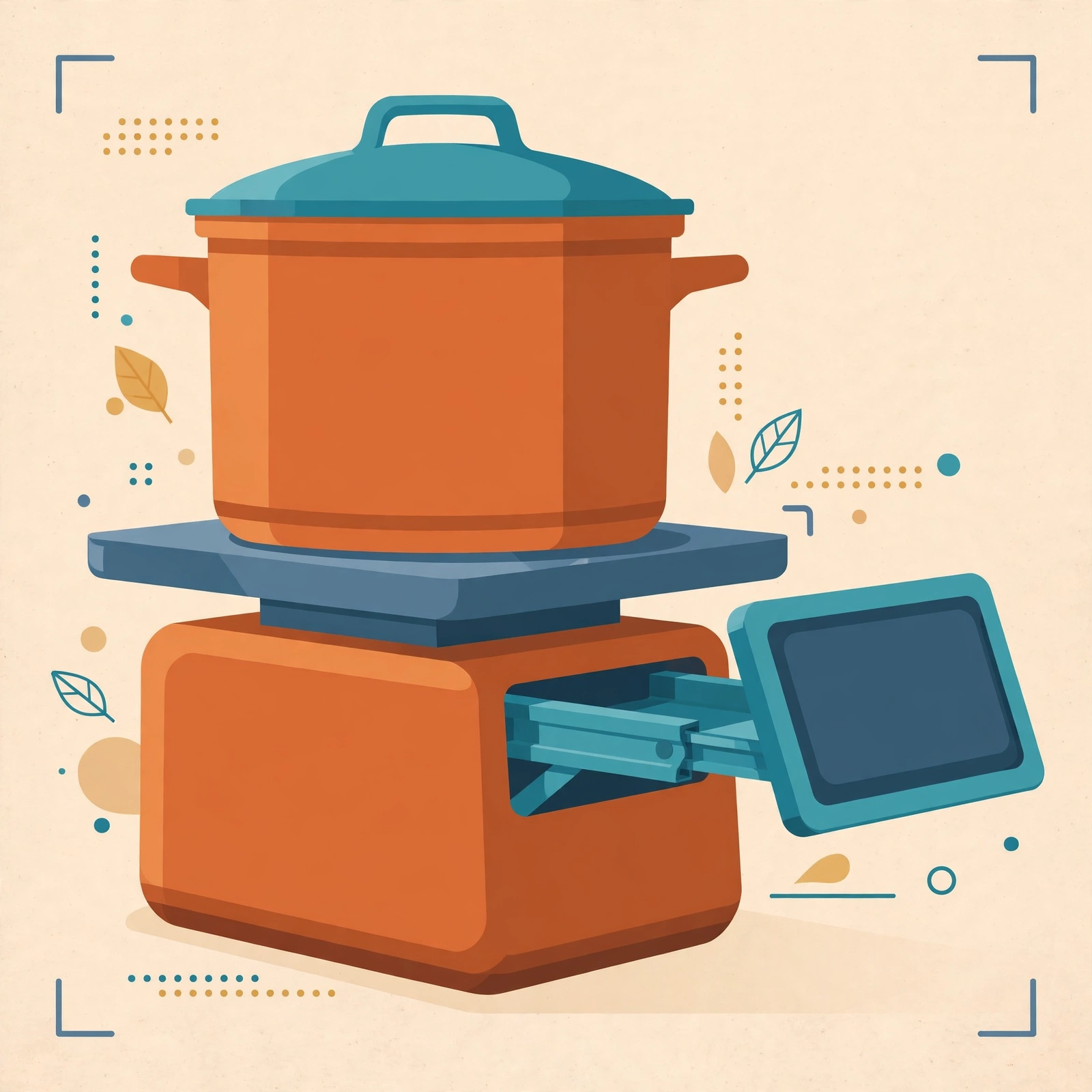
Most kitchen scales tap out at 5kg, fine until you put a Le Creuset full of stew on one. The Greater Goods goes to 10kg/22lb while keeping 1g precision, with a hi-def LCD that extends beyond the platform so big pots don't hide the reading. Stainless steel surface, touch controls, hold function that freezes the reading for 5 minutes.
Our take: The batch-cooker's scale. If you meal-prep, make stock, bake multiple loaves, or just own heavy cookware, the extra capacity removes a real frustration. For normal daily cooking it's more scale than you need, but it's barely more money than the 5kg options.
The KD-8000 is a legend in baking forums, and the reason is one feature: baker's percentages. Weigh your flour, hit the % key, and every ingredient after shows as a percentage of the flour weight: the professional way to scale recipes up or down without doing any maths. 8kg capacity, removable stainless platform, and a hinged splash guard that protects the display from messy dough work.
Our take: If you bake bread regularly, this feature will change how you work. It's less sleek than the OXO and the interface has a learning curve, but nothing else at this price does baker's math. For sourdough obsessives, it's the only choice here.
The Pronto's trick is variable graduation: 0.1g precision for anything under 1kg, stepping to 0.5g above that, up to a 6kg capacity. That makes it the only scale here that can accurately weigh 2g of yeast or 0.5g of saffron, quantities where 1g precision is basically guessing. Six units including ml, enlarged platform, and buttons separated from the weighing surface so pressing them doesn't disturb the reading.
Our take: The precision pick for bakers who work with preferments, spice blenders, and home coffee brewers. (Espresso nerds: our coffee scale guide goes even finer, to 0.1g across the full range.) For general cooking the extra precision is invisible, but when you need it, nothing else here has it.
1g vs 0.1g: How Much Precision Do You Actually Need?
This is the question that paralyses kitchen scale buyers, so here's the straight answer:
1g precision: enough for 95% of cooking and baking. Flour, sugar, butter, meat, vegetables: all fine. Every scale here except the Ozeri offers this.
0.1g precision: needed for yeast in small batches, spices, salt in bread (where 2g vs 3g matters), and coffee. Only the Ozeri Pronto offers it here (under 1kg).
Don't pay for precision you won't use, but don't dismiss it either. If you've ever tried to weigh 3g of instant yeast on a 1g scale and watched it flicker between 2 and 4, you know exactly why 0.1g exists.
Keeping Your Scale Accurate
Kitchen scales drift. A knock off the counter, a year of flour dust in the sensor, or just cheap load cells, any of these can push readings off by a few grams. For baking, a few grams matters.
Use a hard, level surface. Never on a wobbly table or near the hob's heat.
Check it monthly. A sealed 500g bag of sugar or a litre of water (1000g at room temperature) makes a decent rough check.
Calibrate properly once a year. Real calibration weights are cheap and the process takes two minutes; our calibration weights guide walks through it.
Don't overload it. Exceeding capacity even once can permanently damage the sensor. The OXO's capacity meter exists for exactly this reason.
How We Chose These 6
We didn't test these scales hands-on, and we won't pretend we did. We compared current options on precision, capacity, display readability, tare function, unit options, build quality, warranty, and long-term reliability signals from the buyer base (including best-seller rankings in the Digital Kitchen Scales category). We excluded scales with dead listings, no-name brands with no support network, and coffee-specific scales: those have their own guide.
Every Amazon link was verified live at publication. Prices and availability change, so the "Check Price" button shows you the current state.
Frequently Asked Questions
What is the most accurate kitchen scale?
For general cooking and baking, 1g precision is plenty: every scale here offers it. For small quantities like yeast or spices, the Ozeri Pronto's 0.1g mode (under 1kg) is the most precise option in this guide. Real-world accuracy also depends on a flat surface and occasional calibration.
Are digital or mechanical kitchen scales better?
Digital, for almost everyone: 1g precision, tare function, unit conversion and compact storage. Mechanical scales look charming and need no batteries, but typically measure in 25g increments, far too coarse for baking.
What capacity kitchen scale do I need?
5kg covers everyday cooking and most baking. Choose 8–10kg if you batch-cook, bake large loaves, or weigh heavy pots: the Greater Goods (10kg) and My Weigh KD-8000 (8kg) cover this. Don't buy more capacity than you need; it costs precision at the top end.
Do I need a kitchen scale for baking?
Yes: it's the single biggest upgrade to your baking. A cup of flour can vary by 30% depending on how you scoop; 250g is always 250g. Professional bakers work entirely in grams and baker's percentages.
How do I calibrate a kitchen scale?
Place a known weight on the scale and compare the reading. A 500g bag of sugar works as a rough check; proper calibration weights give a precise result. See our calibration weights guide for the full method.
Can I use a kitchen scale for coffee?
For French press or filter, yes: the Ozeri Pronto's 0.1g mode handles it. For espresso, you need 0.1g across the full range plus a timer, which is coffee-scale territory. See our best coffee scales guide.
Our Top Pick: OXO Good Grips 11lb
The pull-out display solves the one problem every other kitchen scale has, the stainless steel build lasts for years, and 1g precision covers everything from Victoria sponge to Sunday roast. Buy it once, use it daily.
By the StoneToKG editorial team. We research the market and verify every product link. We don't do hands-on testing, and we say so. Last updated October 2026.
Privacy choices
Choose how cookies are used
We use essential storage to keep the site working. With your permission, Google may use analytics and advertising cookies to measure visits and show relevant ads. You can change your choice at any time.